You cannot close the empathy gap from behind a desk. You have to go to the places your decisions touch and sit with the people who live with the consequences. On 18 June 2026, we took twenty-one sustainability practitioners from six countries, in person and virtual, behind the scenes at Christchurch International Airport, to see how it's really done, warts and all. This is what we found.
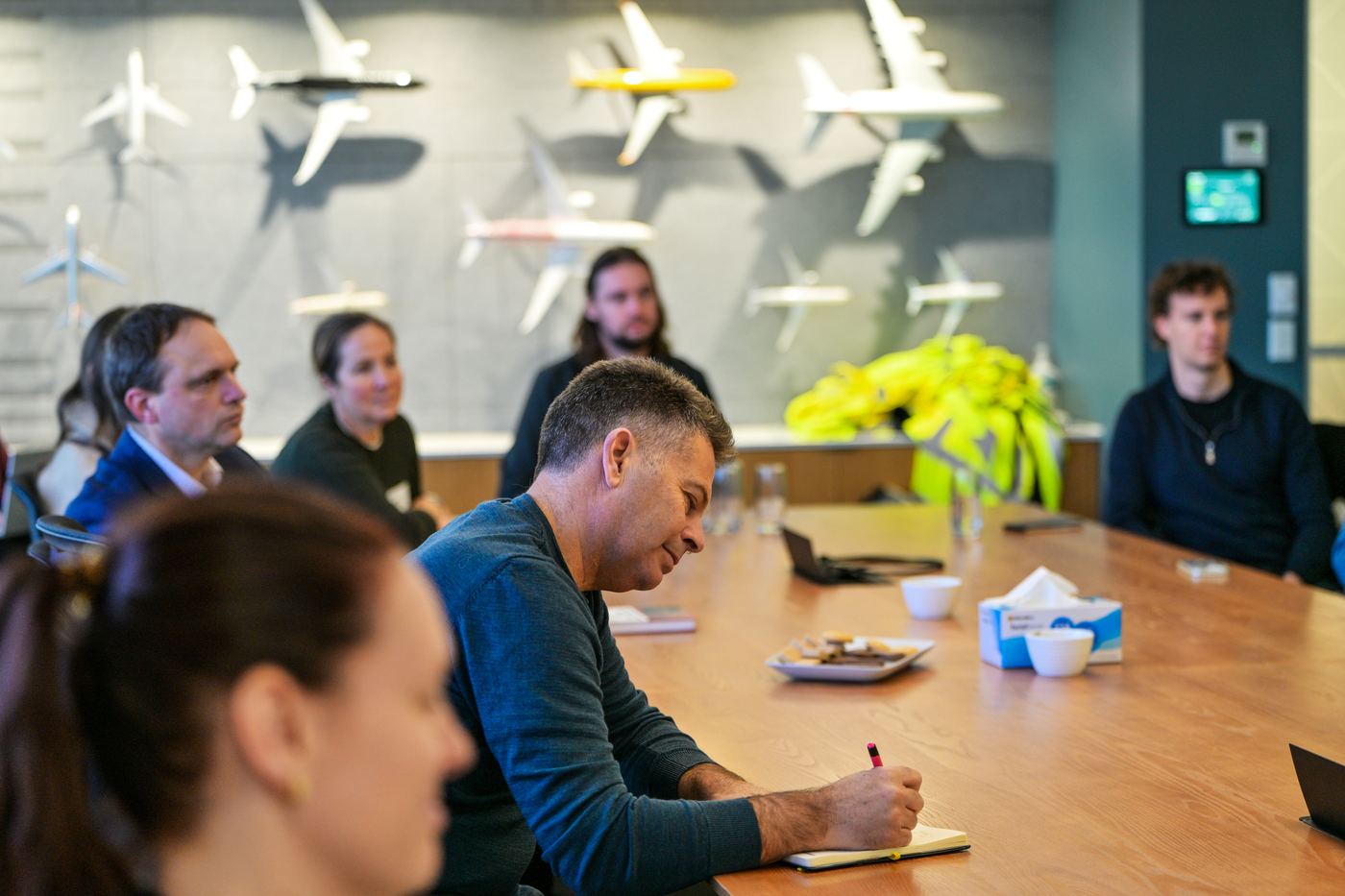
The energy story is further along than most people realise
Christchurch Airport has reduced its Scope 1 and 2 emissions by 92% against a 2015 baseline, with absolute zero targeted for 2035. But Claire Waghorn, their head of sustainability, will tell you that 92% is only the part within their control. That part now accounts for less than 1% of total emissions. What remains is the flights, shaped by fuel supply chains, airline decisions, and a system no single airport can move alone.
What the airport can control, it has. Planes plug in at the gate instead of burning auxiliary fuel. A closed-loop ground source heat pump heats and cools the terminal using the ground itself, without touching the aquifer underneath. Behind the runways sits Kowhai Park, one of New Zealand's largest solar farms: 300,000 panels, enough to power 36,000 homes, with a two-hundred-year-old kowhai tree still standing in the middle of it.
And the electric fire truck. The first in the Southern Hemisphere. Five years of lobbying the manufacturer. Firefighters did not want it at first. Until they used it and the biggest positive was not emissions or fuel savings. It was silence. Without a diesel engine roaring, crews on the scene could hear each other, the fire, and the people around them. Other airports have since asked to learn from the programme. And because it runs on electricity, the airport was quietly de-risked when New Zealand's fossil fuel supply constraints hit.
One detail that matters more than it sounds: other New Zealand airports cannot electrify their ground equipment because they lack charging infrastructure. Christchurch has capacity to spare, because somebody eight years ago negotiated EV infrastructure into airline charges before anyone needed it. That is what sustainability actually looks like in practice. Not a campaign. A decision made for a version of the future that did not exist yet.
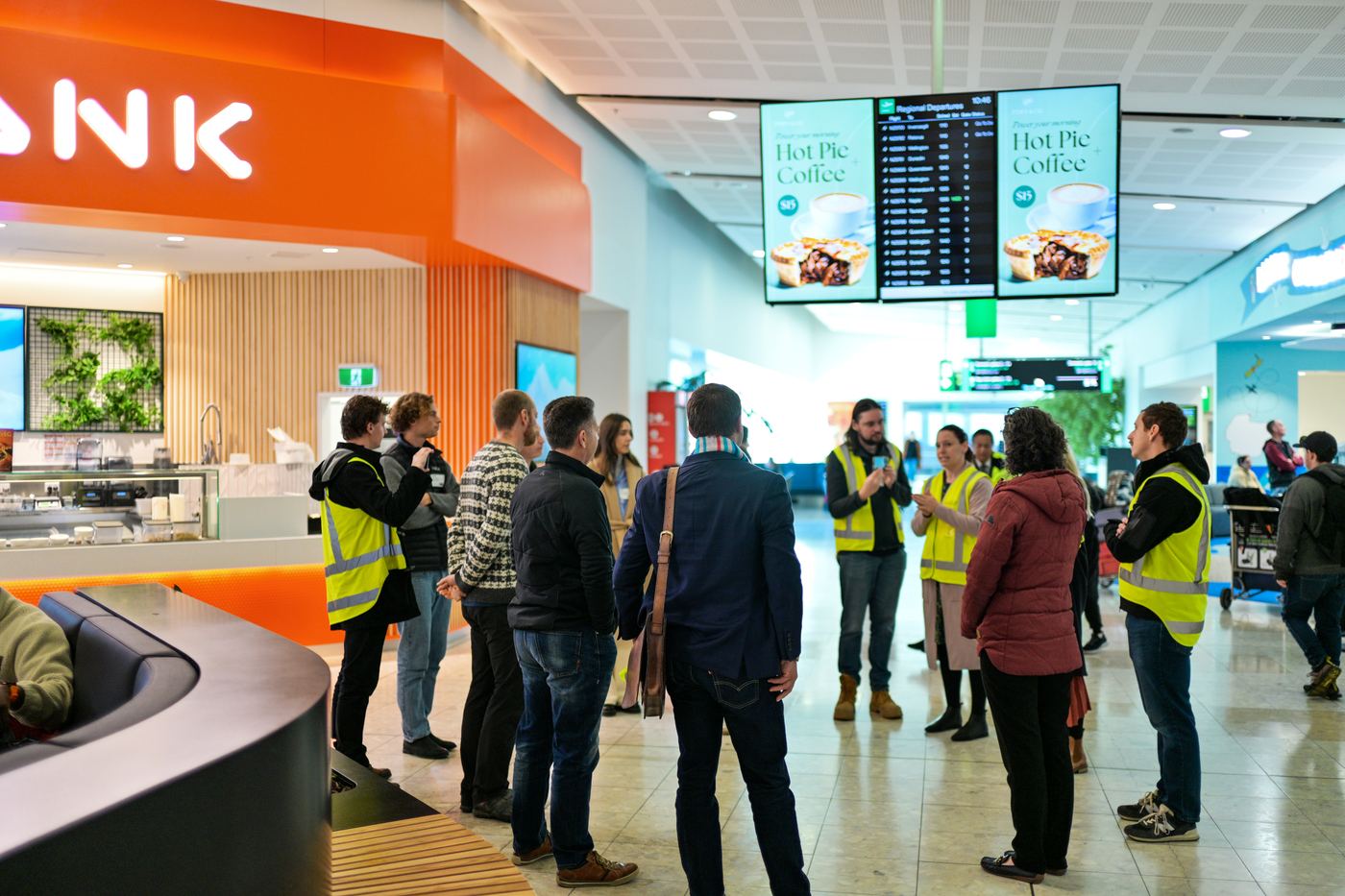
Waste is where the empathy gap opens up
Despite those numbers on energy, waste sits at just over 50% diversion, against a target of 80%. That is consistent with large facilities and airports internationally.
Behind the terminal, two employees sort the airport's rubbish by hand. Six hours a day, six days a week. Pulling out what could have been recycled, what someone dropped in the wrong bin a few metres away without thinking. That manual sorting table is the only intervention that has ever measurably improved diversion. Not the signage. Not the clever bins. They tried every combination. None of it shifted passenger behaviour. Not here, and according to the research, not at airports anywhere.
You do not get past 50% by sorting harder. You get past it by changing what goes into the bin in the first place. And to make one coffee cup circular, you need the food outlets (run by a separate company the airport cannot just order around), the airlines, the other airports, the council, and the Ministry for Primary Industries, because some of this is quarantine waste with its own rulebook entirely. It was easier to get the first electric fire truck in the Southern Hemisphere and the country's largest solar farm than it is to get rid of coffee cups.
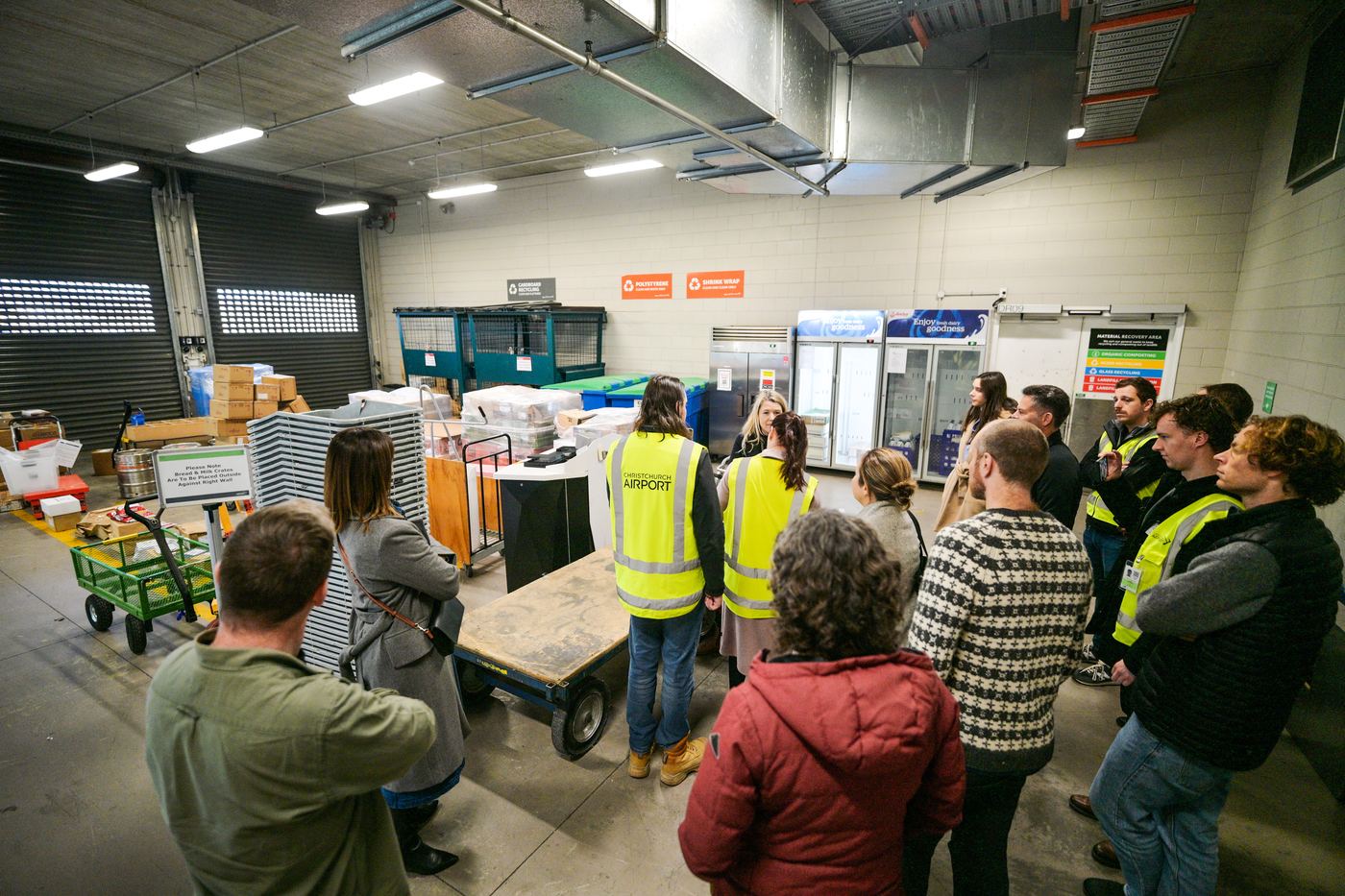
This is the part people rarely see from their phones. The systems that create waste are people systems. Tenant relationships, commercial incentives, regulatory overlaps, cultural reluctance to enforce. Every one of those is a Sphere 4 problem: indirect stakeholders whose decisions are tangled into yours, whether you mapped them or not.
Smaller things still matter. The team rescues unopened confiscated food for the city food bank: three tonnes so far this year. They are building the Flybrary, the first airport library in New Zealand, stocked entirely with books pulled from the waste stream.
The story that shaped how they communicate
In 2022, Christchurch Airport achieved certified climate positive status: 120% offset through real native forestry. They intended to keep it internal. Instead, it was announced publicly. The nuance, that the airport's own operations were carbon neutral but the planes were not, did not land. The perception was greenwashing.
Claire pulled the claim from all public materials before an Advertising Standards Authority complaint arrived. The complaint was ultimately not upheld, precisely because they had already acted. Her favourite stories now, she told the group, are the bad-news ones. Because those are the ones people actually believe.
Sit with that for a moment. We have built a world where a company is safer admitting a failure than announcing a verified win.
Why this sits under the 5 Spheres
The biggest source of emissions at an airport, the flights, cannot be solved by the airport alone. The smallest and most persistent problem, the cup, cannot be solved alone either. The only things a giant can fix by itself are the ones it completely controls.
In my view, sustainability work is empathy work. It is Sphere 4 (affected indirect stakeholders) and Sphere 5 (those who come after) made concrete: putting genuine attention on the people and places your decisions touch who never entered the room, and on those who will inherit what you chose. You cannot do that from a report or a meeting. You have to go there, stand in the waste room, talk to the person sorting your rubbish by hand, and feel the weight of the system you are part of. That is what closes the gap, for sustainability professionals and the people who enable them.
What participants said
The tour scored 9.3 out of 10 on the post-tour recommendation survey (NPS 85), with thirteen responses across the group.
"It's great to see a place that seems impossible to do good stuff can just do it."
Angus, Corde
"We are all dealing with similar challenges, regardless of the size of our organizations. Supporting and advocating for each other is so important."
Eliza Turnbull, Argus & Kindred
"I will bring more kindness to work meetings. I loved the warm nature of the event, very inclusive, kind, but still serious."
Jarrod Hart, Imerys
"Start thinking about how the little things that people are interested in could be connected to sustainability. Loved it! So interesting, a lot of fun. Give me more!"
James McKenna, Argus Manutech
The full report covers post-tour research on reusable serviceware systems, air bridge wheel recycling, airside heat loss, and recommendations drawn from comparable programmes at Portland International Airport, Amsterdam Schiphol, and San Diego International.
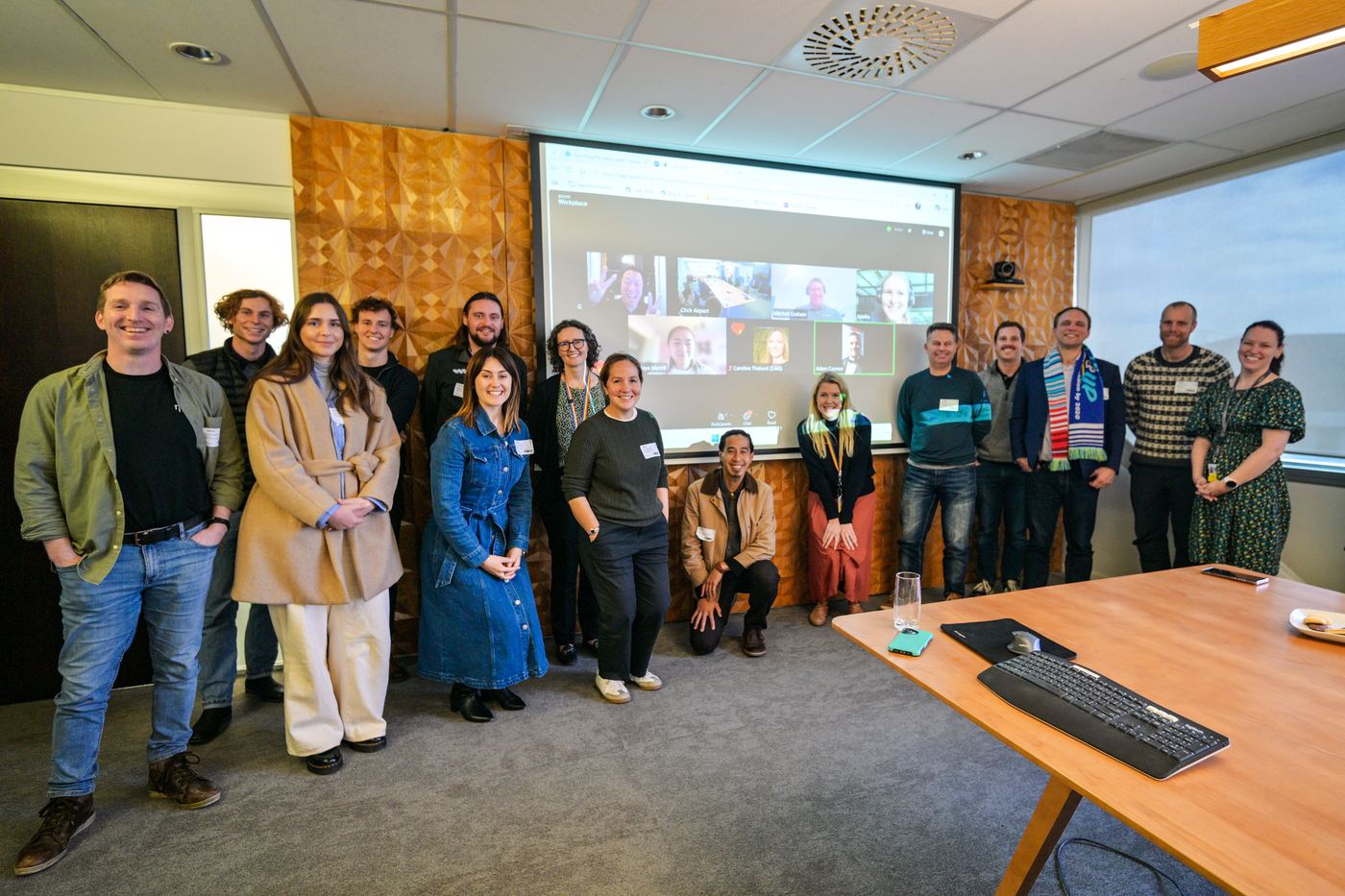
Photos by Kai J. Lee