We take a small group of practitioners behind the scenes at organisations doing remarkable things, to see how it is really done, warts and all. Not a showcase, not a keynote, and not a sales visit.
A guide walks the group through the actual operation, speaks with staff along the way, and answers honest questions about what is working and what is not. The group is deliberately mixed: different sectors, different countries, different sizes of organisation, which is what makes the questions worth answering.
Ten people join in the room. Everyone else joins virtually, in the same conversation rather than watching a recording afterwards. It runs two to three hours depending on the site, and the insight report reaches everyone who attended about a week later. Three of us run it: G and two coaches from Business Sustainability First Principles, one of whom stays with the virtual group throughout so nobody is left watching.
Sustainability work is empathy work. It is Sphere 4, the affected indirect stakeholders, and Sphere 5, those who come after, made concrete. You cannot close that gap from behind a desk. You have to go to the places your decisions touch and stand with the people who live with the consequences.
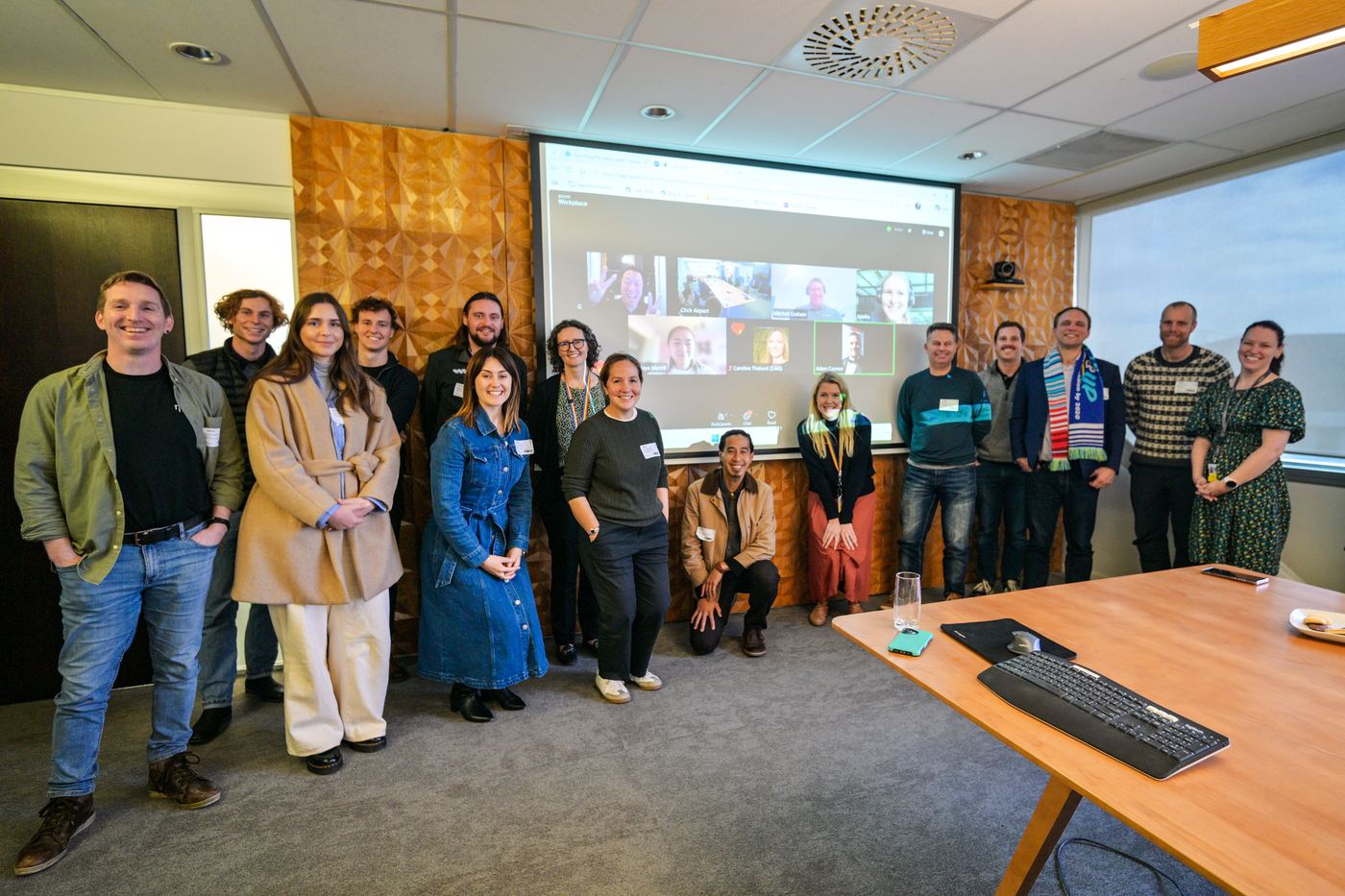
Christchurch International Airport, June 2026. Twenty-one practitioners from six countries, in person and virtual.
A hybrid welcome that puts both halves of the room into one conversation, and sets how the group will treat anyone thinking out loud before anyone is asked to be honest.
The guided walkthrough. The guide speaks with staff and shows real operations. A virtual support lead manages the remote half so nobody is left watching.
The group reviews the live board together: journey maps, what was observed, where the gaps sit. The host is in the room to correct anything misread.
About a week later the written findings reach everyone who attended, including the host. The host sees the write-up before anything is published.
The airport has cut its Scope 1 and 2 emissions by 92% against a 2015 baseline. It has a closed-loop ground source heat pump, one of New Zealand's largest solar farms, and the first electric fire truck in the Southern Hemisphere. The group saw all of it.
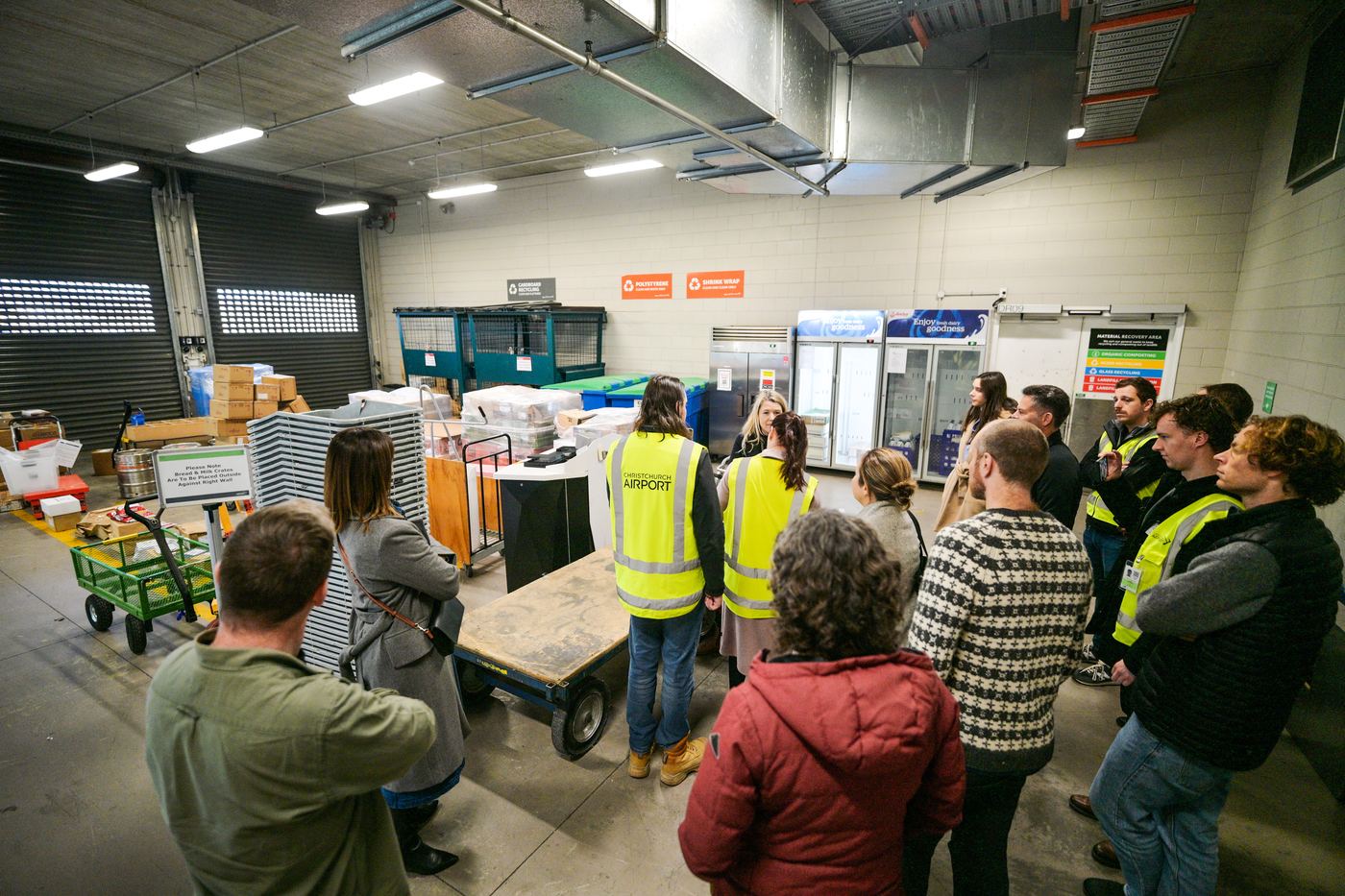
Then they stood in the waste room, where two employees sort the airport's rubbish by hand, six hours a day, six days a week, because it is the only intervention that has ever measurably improved diversion. Not the signage. Not the clever bins. The honest parts are the ones the group remembered.
That tour scored 9.3 out of 10 on the post-tour recommendation survey, a Net Promoter Score of 85 across thirteen responses.
The waste room. It was easier to get the first electric fire truck in the Southern Hemisphere than to get rid of coffee cups.
Six things, and none of them are expensive. They all exist for one reason, which is that a hybrid tour falls apart quietly if the remote half of the room becomes an audience instead of participants.
A boardroom or similar where both halves congregate, at the start and again for the debrief. Audio good enough that remote participants can be heard in the room, not only seen.
Reliable connectivity in the meeting room and as much of the walking route as your site allows. Tell us in advance where coverage drops.
The virtual host keeps the camera on what matters and carries remote questions to the guide. One person cannot do both while walking.
Beyond that a walkthrough stops being a conversation and staff on the floor stop speaking freely. Everyone else joins virtually.
Someone permitted to say what is not working, not only what is. The tours that land hardest are the ones where a host says this part we have not solved.
Site access, any safety induction or protective equipment your operation requires, and agreement on what may be photographed and what stays off the record.
Tell us what you run, what you are proud of, and the part you have not solved yet. That last one is usually where the good tours come from. Every host is vetted before invitation.
Talk about hosting →Places in the room are limited to ten, and the virtual group is larger. Tell us what you work on and we will let you know when a tour fits.
Ask about the next one →