Unpopular opinion: a successful pilot is dangerous for a government programme.
“But G! It worked with 1,000 people!” you say.
Last week I spoke to more than 150 civil servants at Cambodia’s Ministry of Posts and Telecommunications about artificial and human intelligence in public service.
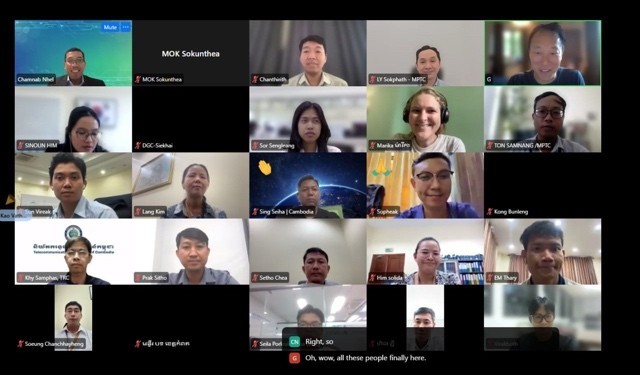
The journey of any programme
I showed them the journey of any programme: trigger, consultation, design, build, approval, pilot, redesign, adoption.
Before AI, every stage was a white box of human work. The assumption now is that AI turns them all black: unseen, automated, done.
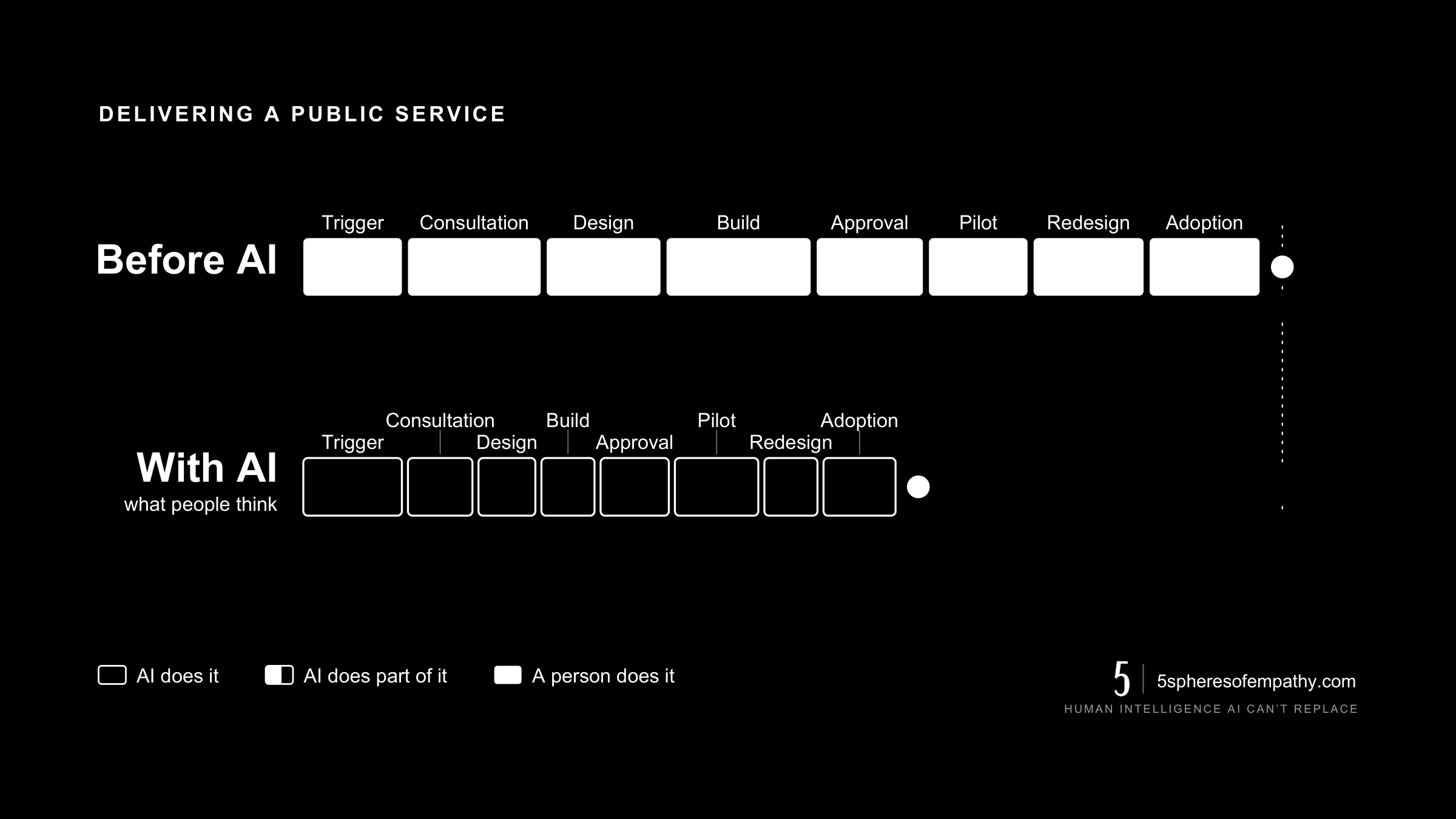
But the reality is not quite as sexy.
AI really has made design and build quicker. But judging what’s actually right, getting the project off the ground, and getting people to adopt it, takes as long as ever. Sometimes longer.
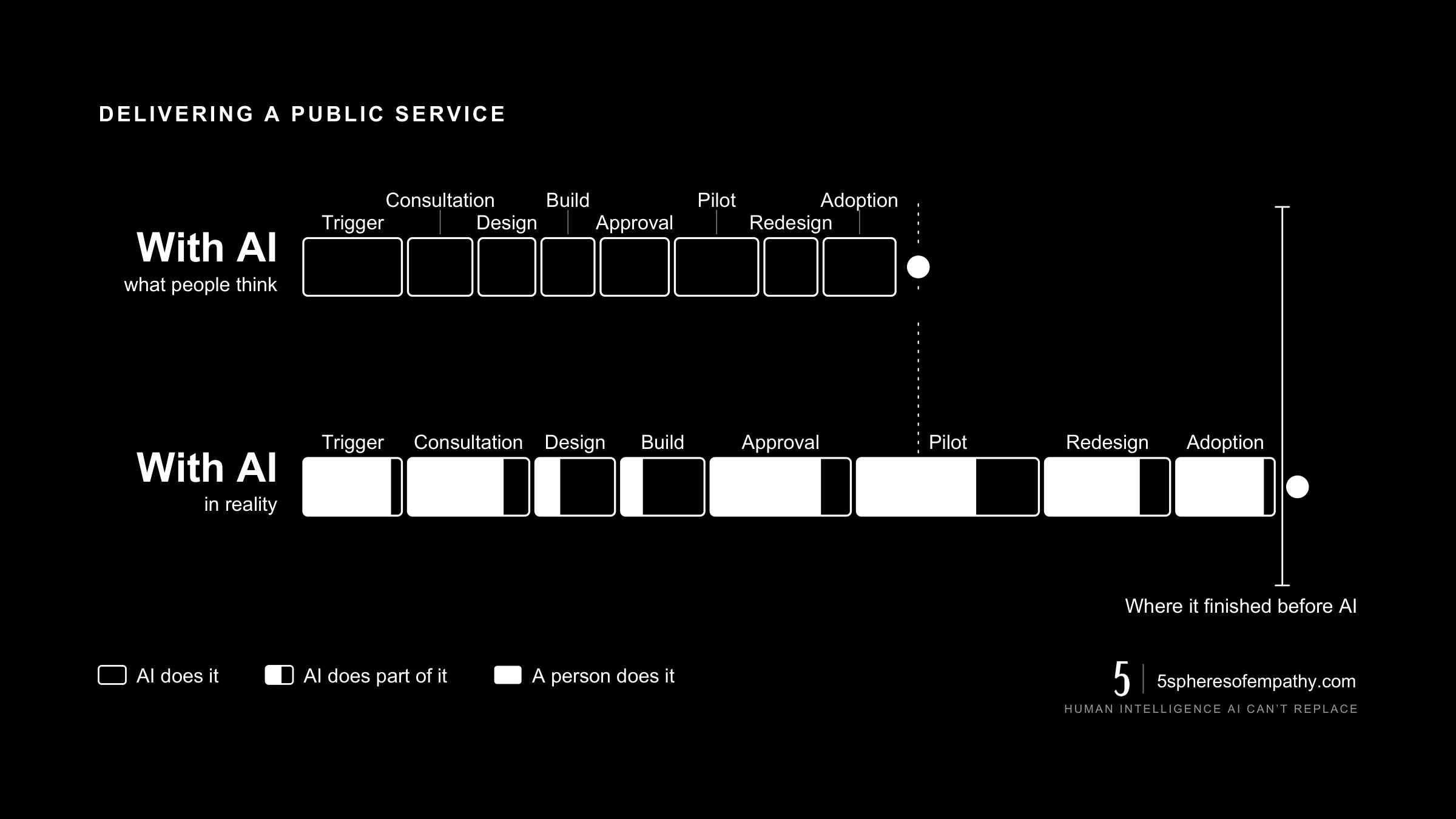
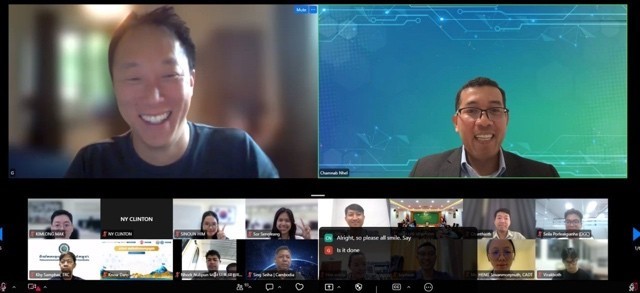
Chanthirith asked it during the questions.
The answer: strategy is just a theory. If execution is poor, you never find out whether the strategy was good or bad.
Good execution starts with leadership and flows down into culture and teams. That’s the part you can control.
Now whether citizens actually use and benefit from the programme, that shifts control down to influence. So you need fallbacks, check every assumption, execute well and pray.
Why scale breaks things
The best explanation I’ve heard on why scale breaks things comes from Kazuo Inamori. In A Compass to Fulfillment he describes how a company has to rethink its whole system each time it grows by roughly a factor of three. Going from 9 staff to 27 changes HR, tax, sales, even the office.
Going from a 1,000-person pilot to a million citizens is far more than three times.
Of course it breaks.
McKinsey found that fewer than a third of companies ever scale their pilots company-wide.
What carries a programme through
What carries a programme through that jump is completely human: the ability to adapt, curiosity, courage, patience, care.
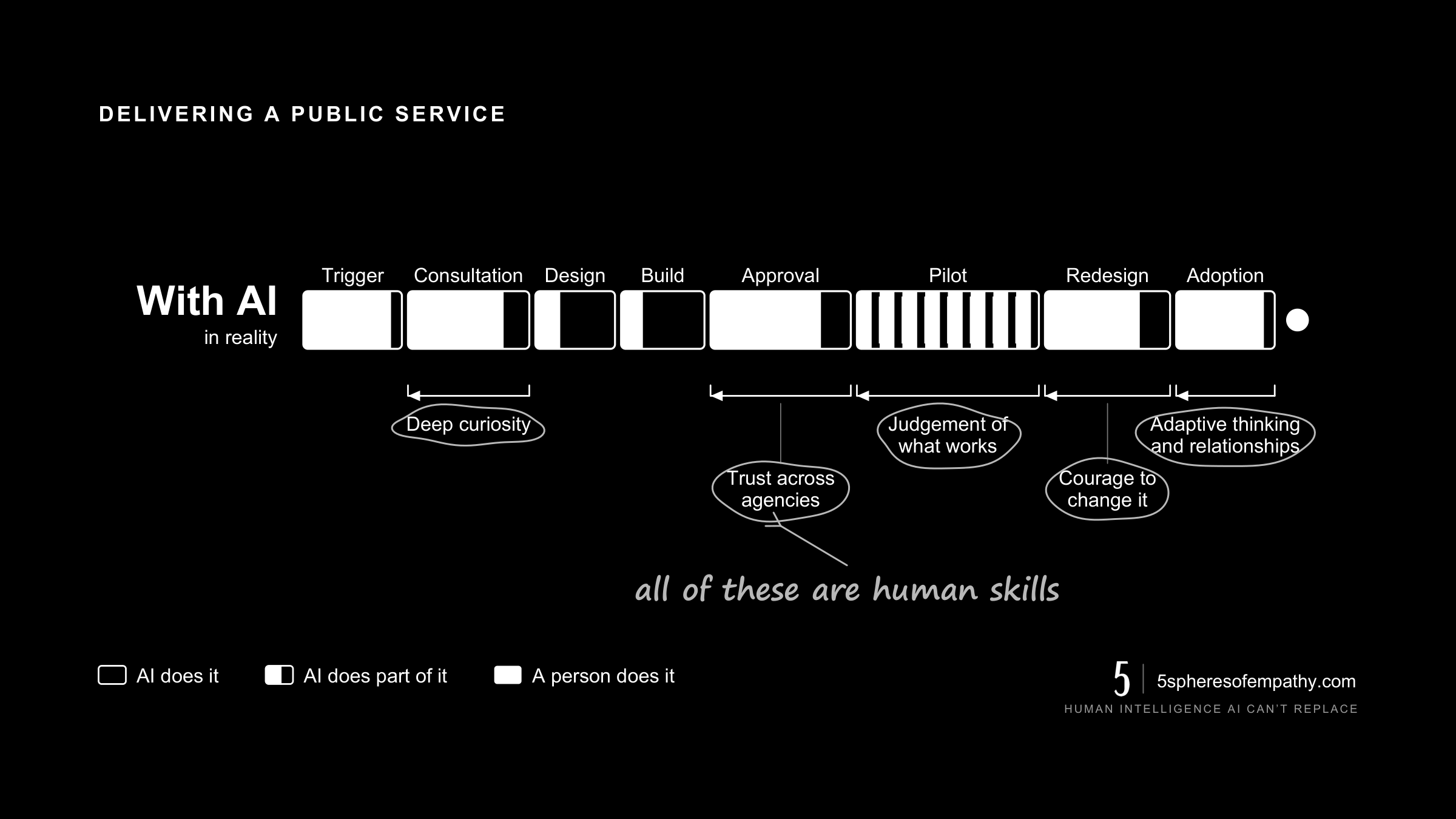
And empathy, which isn’t a soft feeling. It’s human intelligence: understanding how people physically feel, what they’re thinking, and how they’re emotionally responding. That’s how you design for the resistance that will always come.
Lee Kuan Yew once said, “If good people don’t go into politics, bad people will.”
In the spirit of Wang Yangming, whose teachings shaped the samurai code, the highest roles need people of the highest virtue, with the smartest executors working alongside them. This way you can at least trust that your strategy was built on what is right to do, not just the most popular or even the most efficient thing to do.
Trees for the forest, am I right?
My life mission is to bring more empathy and compassion into the world. And I see the strengthening of institutional leadership and capability as one of the biggest enablers of that outcome.